“I just thought it was normal” – the hidden reality of young mental health carers
For many young people, caring doesn’t have a name. It’s something they do as part of everyday life, being there when someone needs them.
As Tanya Boge from our Carer Support Team explains:
“Many young mental health carers don’t identify with the word ‘carer’ they see what they do as just helping out.”
What often goes unseen is everything that sits behind that. The mental load, the worrying, the responsibility, and the feeling like they have to stay strong, even when things are uncertain. Over time, that can begin to shape how young people see themselves and where their own needs fit.
“Many also grow up without clear boundaries, which can make it harder to balance their own needs alongside supporting someone else.”
For Tanya, this understanding comes from her own experience.
“It’s important to me because I was a young mental health carer myself, even though I didn’t have that language at the time. I just thought it was normal to take on that level of responsibility and not have clear boundaries.”
Looking back, she can see how those early experiences shaped her.
“Without early support, young carers can develop patterns like putting themselves last, struggling with boundaries, and carrying stress on their own.”
Without the right support, that experience can start to have a real impact. School can become harder to keep up with, friendships can feel more distant, and their own mental wellbeing can gradually take a back seat.
That’s why early support matters. With the right support in place, young carers are more likely to stay connected to school and their goals, maintain friendships, and begin to understand their own needs alongside supporting someone else.
At Arafmi, support is centred around connection and understanding. This can include peer groups, one-on-one conversations, and programs like Youth eCPR (Emotional CPR), which helps young people support themselves and others through emotional distress while learning about self-care and boundaries. Young carers are also linked with free community supports, so they don’t have to figure everything out on their own.
This Queensland Youth Week (11-19 April 2026), with the theme “Unleashing Your Potential,” is an opportunity to recognise both sides of that experience, what young carers give, and what they need in return. Young carers contribute every day, often in ways that aren’t recognised. They develop empathy, emotional awareness, and problem-solving skills, and play an important role in supporting their families and communities.
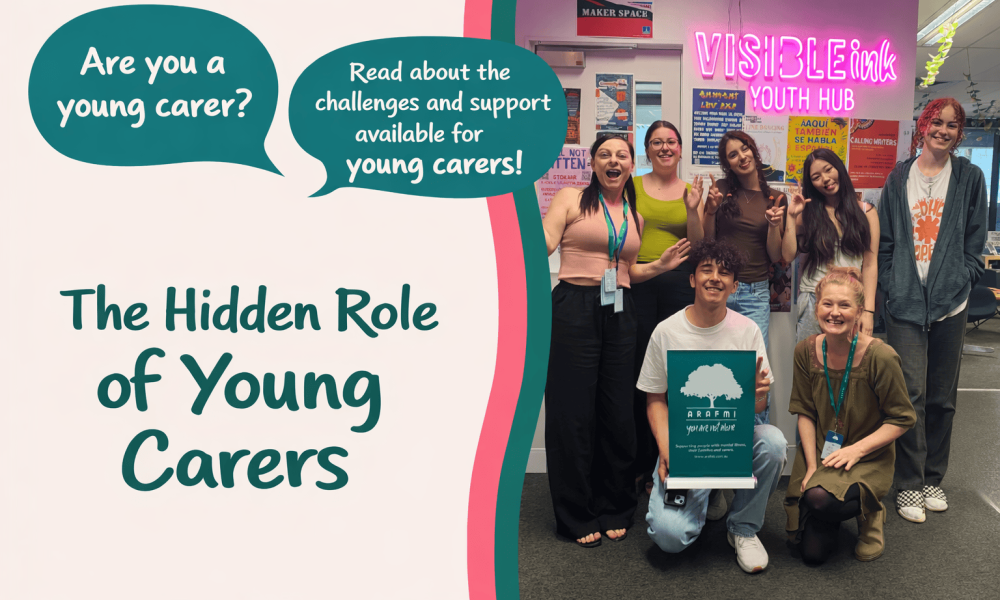
For many, that caring role can remain hidden. But with the right support, young carers can feel seen, understood, and connected.
“Supporting young carers now is about making sure they feel seen, understood, and connected, so they don’t have to navigate it on their own.”
Helpful resources for young people
Youth Carer Fact Sheet (services and support options)
Queensland Youth Week events