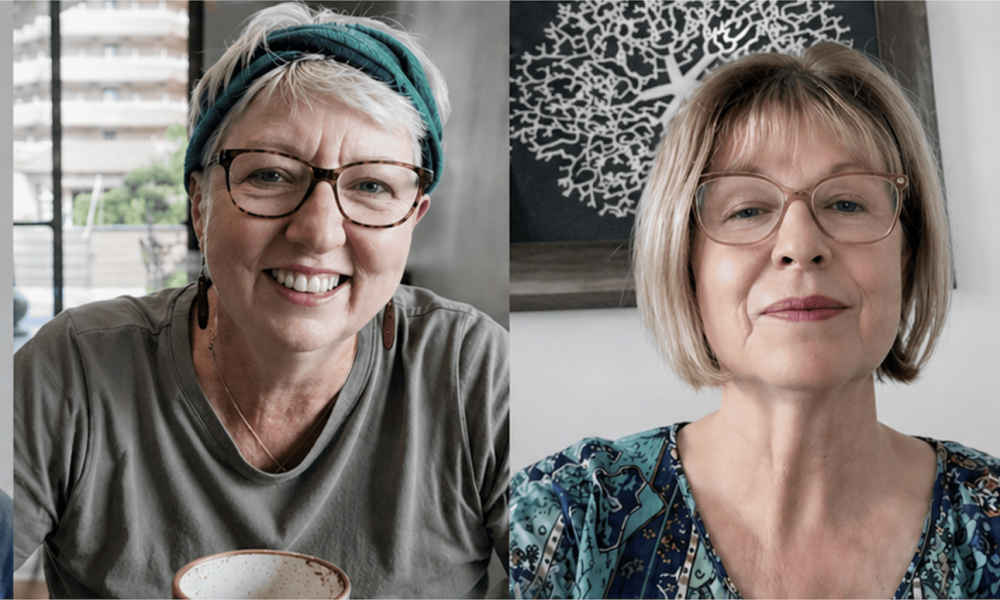
For Arafmi volunteer Louise Dutton, when her son became unwell with mental ill-health, she “didn’t really know what she was dealing with.”
That’s where her connection with Arafmi began, not as a volunteer, but as a carer trying to make sense of something overwhelming, unfamiliar and at times isolating.
Over time, that experience became something she could offer others. Now 82, she’s spent the past 25 years answering calls on the 24-hour Carer Support Line and sitting alongside carers in support groups. What she brings isn’t a set of answers, but a way of helping people feel understood.
As she explains, “Listening plays a big part. And so you’ve got to find out where the person is coming from… sometimes the person is so stressed that they can go round and round in circles. You just try and pick out a few points and confirm, is that what you’re telling me? And then try and help them to understand that we know where they’re coming from because we’ve had a similar experience.”
For carers reaching out, that recognition can be enough to help people feel more steady and see a way forward. Louise has seen it time and again, people feeling “relieved that somebody knows what they’re talking about…, there are certain things that they can follow up on, and it’s not all bad news.”
That kind of understanding is what many volunteers bring with them, because they’ve been in similar situations themselves.
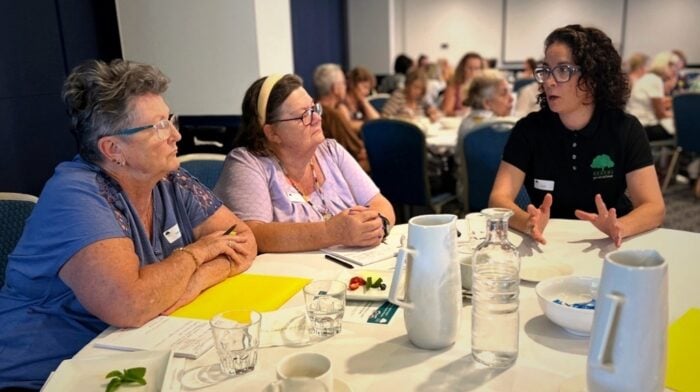
Another Arafmi volunteer, Julie, facilitates a carer support group and sees how quickly that shared experience can make a difference. When people realise they don’t have to explain everything from the beginning, it can ease some of the pressure straight away. She remembers one carer arriving at their first support meeting with little hope, and how by the next month, they shared that “they felt a huge weight had been lifted and they didn’t feel alone in their journey anymore.”
For Julie, it’s personal.
“I love to give back to people and organisations who have been there for me. My journey as a carer has bought some really dark times in my life and some really amazing times with the ones I have cared for. By sharing my story, I feel I can provide hope to others who are going through their darkest times. If one person walks away feeling better than they did when they arrived, my time has been well worth it.”
Many volunteers start in that same place, sitting in a carer support group or on the phone, sharing their story and trying to understand what’s happening in their own lives. Most don’t begin thinking they’ll take on a volunteer role.
Julie puts it simply, “I fell into this role never thinking I’d have the confidence.”
What changes isn’t confidence overnight, but perspective, realising that what you’ve been through might help someone else.
Over time, those shared experiences start to shape the group itself.
Another volunteer support group facilitator, Margaret, says that over time, sharing experiences helps build trust within the group.
“I do feel that when we share these experiences and stories, that it builds trust and authenticity amongst the group. I have been involved in the stories in the support group for 17–18 years.”
Over time, that trust creates a space where people feel comfortable to share openly, and where support flows both ways.
Helen has found that being part of those spaces supports her as well.
For her, it’s that connection that keeps her coming back. “Facilitating isn’t just giving,” she says. “It’s receiving hope, resilience and connection too. I participate like a participant, even when I’m facilitating the sessions. It’s about giving and receiving. By me sharing, it adds to my wellbeing and it is safe self-care for me to also facilitate. It equals out the give and take.”
Across all of them, there’s a common thread, they’ve taken a difficult experience and turned it into support for someone else.
During National Volunteer During National Volunteer Week, from 18 to 24 May, Arafmi is recognising volunteers like Louise, Julie, Helen and Margaret, people who have done exactly that. The 2026 theme, “Your Year to Volunteer”, recognises the contribution of volunteers and encourages others to get involved.
For anyone thinking about volunteering, their advice is straightforward. You don’t need to have everything figured out.
“Have a go, get amongst it. Talk through on the phone line first if you have any doubts about what to expect. But you can also go along to several support groups in different areas. Watch the facilitators. What are they like? Could you do that? Do you have other ideas? Could you make this more comfortable? There are all sorts of people running all sorts of groups”, Helen
“Just do it. It’s a great time if you want to volunteer and join a company that lives its values, this one is for you”, Margaret
“I say don’t hesitate because the training is very good. It’s not just training you for the volunteer phone line. It’s training you for your life, really.” Louise
And as Julie puts it, “Chances are you have a huge amount of lived experience, therefore, you’re the perfect person to volunteer!”
In the end, it’s about using your own experience to help someone else feel understood, and realising you don’t need to have all the answers to do that.
Want to get involved? You can express your interest in volunteering with Arafmi via the link or call 1300 554 660 to find out more.