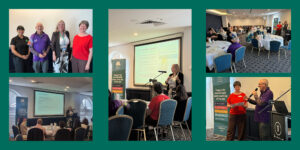
Arafmi Volunteer Profile: Helen
As part of National Volunteer Week (19–25 May), Arafmi Communications Officer Lilly Provenzano sat down with one of our volunteers, Helen, to reflect on her experience as a carer support group facilitator.
1. What motivated you to become a support group facilitator at Arafmi?
I had been attending support groups for five to six years, participating as a carer myself. I was inspired. I have much admiration for them and observed the facilitators and staff clearly during this time. They were so clever and kind navigating big groups and people in trauma. The opportunity arose so I put my hand up.
2. Can you describe what typical support group sessions look like?
Typically, they are varied in age, gender and circumstance. At my group, we see parents, serving long-term partners, sometimes both parents – different dynamics. Every support group session has an informal welcome, a check-in for newbies and then the more practical things like name badges. We welcome people, there are beverages. We do an Acknowledgement to Country.
We spend time explaining the guidelines that the two-hour conversations operate under. We may talk about the time that every person gets to share – that there is no interrupting. We listen and perhaps offer comments at the end, if at all. It’s all to be shared from the personal perspective and share what one finds helpful, not what you need to do. We create a safe space.
Once everyone has had a chance to talk, we will wrap up and reflect on maybe the themes that have happened. At the end, we always talk about self-care and the attention that’s needed for self-care. It’s quite an organic finish and we do try to finish on a positive note. Looking after ourselves is the best way we can look after others.
3. How do you create a safe and welcoming space for mental health carers?
We try by remembering names and really welcoming people, new or newish. People are reminded that they don’t need to share and that there’s no pressure. We hope that by being there, they feel less alone and that they’re being listened to and that that’s enough.
4. What are some common themes carers share during group sessions?
Frustration – predominantly at the medical and psychological navigation of these medical systems. They cannot know enough about the people they are caring for and that can make for a frustrating experience, especially if the person they’re caring for is under 18. They may want to sit in on all of the appointments and feel really in the dark. Finding that balance of agency for the person being cared for and the weight of responsibility of being a carer is a fine balance. There’s also big concerns with aging and what happens to our people when we move on, when we pass on.
5. How do you look after your own wellbeing while holding space for others?
I participate like a participant, even when I’m facilitating the sessions. It’s about giving and receiving. By me sharing, it adds to my wellbeing and it is safe self-care for me to also facilitate. It equals out the give and take.
6. What do you think makes peer support so powerful for carers?
By being peers, we remove the expert dynamic and power imbalance that exists. It’s about collaborating – sharing our perspectives. There’s an equalness in being peers where there’s no judgment and trust develops really easily.
7. What have you learned from carers who attend your group?
Patience and tolerance for the uncertainty. Things could always be worse and things could always be better. By coming to support groups, we understand that there is hope for resilience and for things to get better just as much as there is the certainty that things can always get worse too.
I’ve also gained respect and admiration. I admire those who live in difficult mental health challenges and the carers who support them and how they cope, not fix. And love for all the different times – it’s so important to have these groups as you navigate the journey.
8. Can you share one moment that really stayed with you without personal details?
Yes. Early days, as a participant in the support group, I was listening to all the caring experiences in the room and it equaled over 200 hours of caring experience. Most catch-ups, we have someone in the room who has 50 or 40 years. So I know when I’m walking into a room that there’s already 90 years of experience in there waiting to share some wisdom and acknowledgement. I am blessed and fortunate to be in the room with them. We can always be learning, even after 50 years of caretaking.
9. How do you support new attendees who may be feeling nervous or unsure?
It’s hard in the moment, especially before they start. I think you’ll find things that you can relate to and that is enough. That is, if that’s all you get out of coming to a support group, then you have really gained something. There is no need for more.
10. What would you say about someone thinking of volunteering for support groups?
Have a go, get amongst it. Talk through on the phone line first if you have any doubts about what to expect. But you can also go along to several support groups in different areas. Watch the facilitators. What are they like? Could you do that? Do you have other ideas? Could you make this more comfortable?
There are all sorts of people running all sorts of groups. I enjoy volunteering.
11. Why do you volunteer?
I have passed my paid work phase of life and so now I do things like volunteer my time for purpose. I do things that I relate to, something that I’m good at and give value to – whether it’s guide dogs, fostering or support groups facilitation – there’s many ways you can give back. These groups only exist because of the peer work and volunteers who run them. It makes my heart sing. That’s why these groups exist and that’s why we continue to exist for the next one.