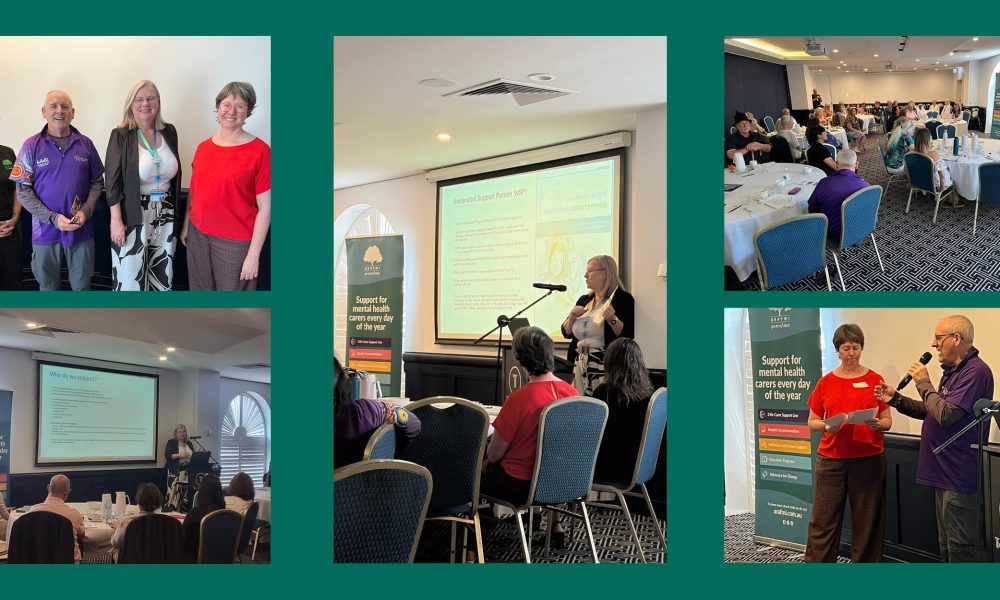
Our latest Future Planning workshop, held on 19 November at the Greek Club, brought together carers, families and supporters for an important conversation about rights, advocacy, and planning for the future. This session centred on understanding the systems that shape mental health care and social supports, and how to navigate them with confidence.
Championing Rights in Mental Health Services
We were delighted to welcome Margaret Murphy, an Independent Patient Rights Adviser (IPRA) working within the Metro South Hospital and Health Service. Margaret’s role is unique: although IPRAs work in public hospitals, they are independent from mental health services, allowing them to offer impartial advice to patients, nominated support persons, families and carers.
Margaret explained how IPRAs support people to understand their rights under the Mental Health Act 2016, offer guidance during difficult or confusing periods of care, and help ensure that people feel informed and heard. She shared useful resources, including fact sheets, brochures and videos, which are easily accessible for anyone wanting to learn more.
One story she shared captured the impact of this service:
“Without the help of IPRA I would have left the hospital and not wanted to come back. IPRA helped me get a second opinion and talk about my concerns for safety and my cultural beliefs with the doctors. I felt heard for the first time in the system and IPRA and the doctors helped me link in with my own community mental health service and take charge of my health without being locked in hospital.”
Feedback like this underscores just how vital independent advocacy can be for people navigating the mental health system.
Understanding Your Rights Around Centrelink and Employment
Our second guest speaker was Steve Irvine, a solicitor from Basic Rights Queensland, a statewide service providing free legal advice, advocacy and support for people experiencing vulnerability. Their work spans employment issues, discrimination, and Centrelink matters, with tailored assistance available for people with mental health conditions.
Steve offered clarity on some often-confusing areas: challenging Centrelink decisions, appealing debts, understanding eligibility for payments like the Disability Support Pension or Carer Payment, and knowing when and how to seek legal support. His insights were practical, empowering, and very well-received by attendees.
A Lively Q&A Session
After the presentations, Margaret and Steve took questions from the audience, sparking a rich discussion on rights, advocacy, and the real-world challenges carers face. Participants appreciated the chance to ask specific questions and gain advice relevant to their own situations.
Future Planning Project Update
Sue Goodwin also provided an update on the broader Future Planning project, including key findings from the recent survey. The results highlighted striking similarities between Australian and Canadian carers:
- Many provide up to 15 hours per week of emotional, practical and health-related support, while others contribute over 50 hours each week.
- Carers often spend thousands of dollars annually to help their loved ones access secure housing and essential services.
- In both countries, carers overwhelmingly expressed a need for help to plan for the future, particularly for the time when they may no longer be able to provide support themselves.
This research reinforces why Future Planning remains such an important focus of our work.
Looking Ahead
For those who couldn’t join us in person, an online repeat of this workshop will be offered in 2026.
We’re also excited to announce two Future Planning workshops in 2026, both centred around housing:
- 18 February 2026: Face-to-face workshop
- 26 February 2026: Online workshop