ProdCommission

Did you know? An estimated 1 million Australians were caring for someone with mental ill-health in 2018, with 700,000 living in the same household. Replacing that unpaid support was valued at $13.2 billion (in 2016)—nearly twice what was being spent on all mental health services at the time.

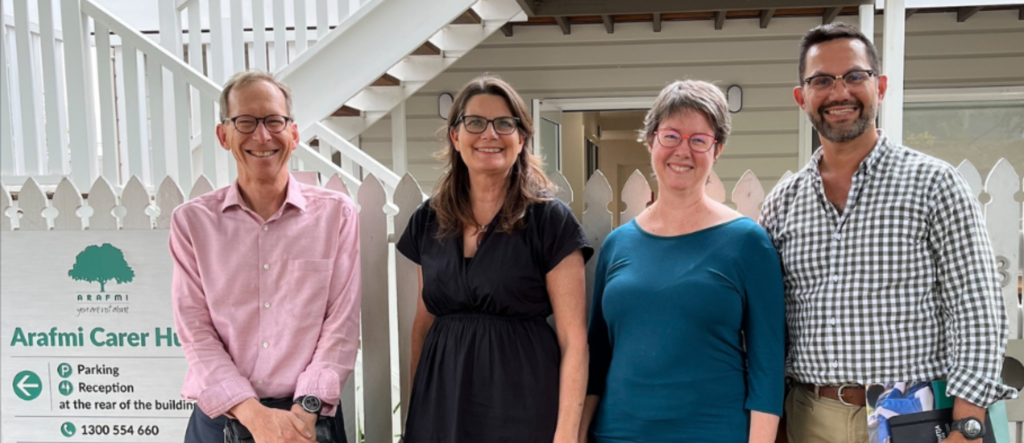
That’s why Arafmi’s Sue Goodwin, Lived Experience Advocacy Team Lead, and Alex Tyson, General Manager Carer Programs and Advocacy met with the Productivity Commission to make sure mental health carers are prioritised in the National Mental Health and Suicide Prevention Agreement. They raised that services and supports for families and unpaid carers need to be part of the mental health system—and valued just as much as services for people experiencing mental ill-health. Without this, carers face long-term emotional, physical, mental and financial impacts.

The discussion also highlighted the need for support beyond just primary carers—like children and young people caring for a parent or sibling, and family groups, kin, and chosen family. Everyone involved in the caring journey deserves to be seen and supported.

Other key issues included the 92,000+ Queenslanders with moderate and severe psychosocial needs still missing out on care, the lack of after-hours crisis services, and the additional pressures faced by carers in rural and remote areas. In Queensland, mental health and suicide prevention services are still not well integrated between state and federal levels—leaving carers to fill the gaps.

They also flagged the lack of national data. Aside from Arafmi’s statewide consultation and a few surveys, there’s very little information about mental health carers—who they are, what they experience, or what support they receive. And without data, carers stay invisible.

The Commissioners were genuinely interested and open to ideas. They were particularly impressed by the Carer Hub model and shared thoughts on how GPs and the peer workforce could play a bigger role in supporting mental health carers.

Find out more about the review at pc.gov.au/inquiries/current/mental-health-review

Related Posts:

Meet Tracy
Advocacy

Meet the Carer Gateway Team: Tracy from Bundaberg

A lifelong carer supporting carers Meet Tracy, supporting mental health carers in Bundaberg When Tracy sits down with a carer for the first time, she often asks a simple question, “And how are you going?”There’s usually a pause. “Most carers start by telling me all about the person they’re supporting,” Tracy says. “Then I ask about them. Sometimes that’s the first time anyone has.” For some, the question brings tears. For others, it takes a moment to even find the words. Tracy is Arafmi’s Carer Support Facilitator in Bundaberg and has been in the role since August 2025. She’s worked in the local mental health sector for eight years, building strong community connections along the way. In a regional area where trust matters, that history counts. But it’s not just professional experience Tracy brings to the role. “I’ve been a carer most of my life,” she says. Tracy grew up as a young carer and today continues caring for her adult children and her partner. That lived experience shapes the way she shows up for others. “I understand what it’s like when everything is about the person you’re supporting,” she says. “Sometimes carers aren’t even in touch with their own needs

Read More »
arafmi blog header warm
Advocacy

Future Planning Workshops – Housing worries – support and advice for carers

Housing worries? Support and advice for carers Housing can be one of the biggest uncertainties carers face when thinking about the future. Renting, housing options and long-term stability are common concerns, especially when supporting someone living with mental health challenges and thinking about what the future might look like. In February, more than 40 mental health carers joined our Future Planning housing workshops (in person and online), to learn about housing options, renters’ rights and where to find support. We invited three guest speakers working across different parts of the housing system to share their knowledge and practical advice. Why stable housing comes first Ryan Twomey from Micah Projects shared how the service supports people who are struggling to find or keep housing. Carers can drop in for an initial conversation with the person they support. From there, staff can help explore options such as housing referrals, crisis accommodation or connecting with other services. Ryan also outlined longer-term housing pathways. This can include applying for Department of Housing, where applications are prioritised based on vulnerability, or exploring community housing providers, where rent is generally around 25% of a person’s income. Micah Projects works from a “housing first” approach, recognising that stable housing is often the first step in helping

Read More »

Speaking Up for Mental Health Carers

Skip to content