TheMHS Blog post header

Shaping the Future of Mental Health – Arafmi at
TheMHS Forum 2025

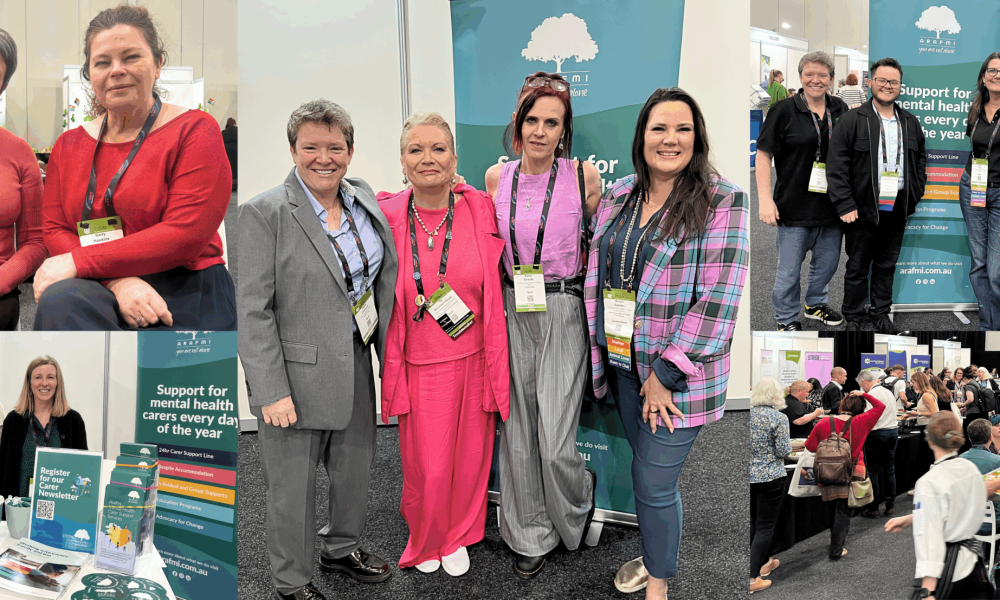
Arafmi was proud to be a gold sponsor at the TheMHS Forum 2025 in Brisbane (2–5 September), where sector leaders, carers and advocates came together to imagine a better mental health system. A big thank you to TheMHS Learning Network for creating such an inspiring space.

Envisioning a Better Future

This year’s theme, “Envisioning 2050: Towards a Better Mental Health System,” painted a bold vision of what mental health could look like in the future including:

  • early intervention is routine and universally accessible
  • support is holistic, skilled, culturally aligned, respectful and kind
  • support from those with lived experience is valued and common
  • short-term respite is available and hospitalisation is rare
  • lived experience informs policy and shapes system culture
  • mental ill-health is no longer a barrier to health, citizenship or employment
  • everyone has a home, meaningful work, loving relationships and strong social connections.


The Forum asked us to consider: What will the world be like in 2050? What steps must we take now to move towards this vision of an ideal mental health system?

These ideas came to life through networking, presentations and panel discussions where delegates shared insights, challenged assumptions and explored bold steps to turn vision into action. Arafmi was proud to contribute to these conversations:

  • Sue Goodwin (Policy & Advocacy) presented on partnering with families and carers during service transitions
  • Farina Zahir (Policy & Advocacy) connected with sector partners to strengthen advocacy
  • Cheryl and Holly (Carer Support Team) ran our stall, sharing Arafmi supports and resources
  • Irene and Alex (Leadership Team) chaired and joined key sector discussions.


Highlights also included a keynote from Rebecca Huntley, sparking fresh thinking on the future of care, and powerful lived experience shared by young carer advocates Luke Randall & John Attard. We also connected with leaders including Kerry Hawkins (Community Mental Health Australia), Karen Conlon (Queensland Mental Health Commission), De Backman-Hoyle (Mental Health Carers NSW) and Katie Shields (Communify Queensland).

TheMHS Forum reminded us of what’s possible when carers, services, advocates and leaders come together to share ideas and drive change.
Related Posts:

Image 29 4 2026 at 3.25 pm
Carer Story

From carer to lifeline: The Queensland volunteers helping others mental health carers

From carer to lifeline: The Queensland volunteers helping other mental health carers For Arafmi volunteer Louise Dutton, when her son became unwell with mental ill-health, she “didn’t really know what she was dealing with.” That’s where her connection with Arafmi began, not as a volunteer, but as a carer trying to make sense of something overwhelming, unfamiliar and at times isolating. Over time, that experience became something she could offer others. Now 82, she’s spent the past 25 years answering calls on the 24-hour Carer Support Line and sitting alongside carers in support groups. What she brings isn’t a set of answers, but a way of helping people feel understood. As she explains, “Listening plays a big part. And so you’ve got to find out where the person is coming from… sometimes the person is so stressed that they can go round and round in circles. You just try and pick out a few points and confirm, is that what you’re telling me? And then try and help them to understand that we know where they’re coming from because we’ve had a similar experience.” For carers reaching out, that recognition can be enough to help people feel more steady and

Read More »
Hidden Role of young carers
Carer Event

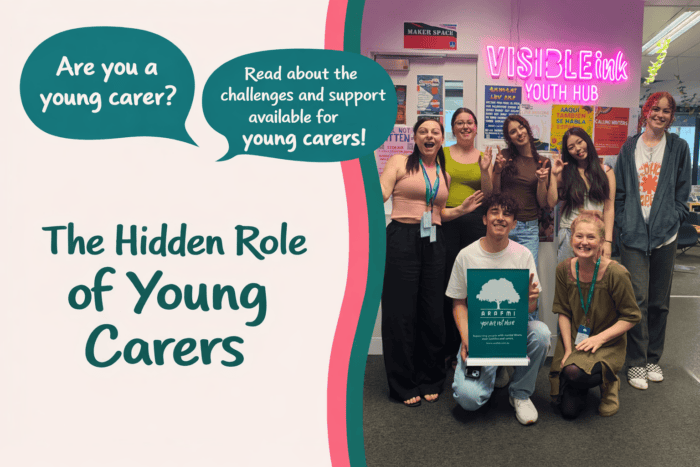
The hidden role of young carers

“I just thought it was normal” – the hidden reality of young mental health carers For many young people, caring doesn’t have a name. It’s something they do as part of everyday life, being there when someone needs them. As Tanya Boge from our Carer Support Team explains: “Many young mental health carers don’t identify with the word ‘carer’ they see what they do as just helping out.” What often goes unseen is everything that sits behind that. The mental load, the worrying, the responsibility, and the feeling like they have to stay strong, even when things are uncertain. Over time, that can begin to shape how young people see themselves and where their own needs fit. “Many also grow up without clear boundaries, which can make it harder to balance their own needs alongside supporting someone else.” For Tanya, this understanding comes from her own experience. “It’s important to me because I was a young mental health carer myself, even though I didn’t have that language at the time. I just thought it was normal to take on that level of responsibility and not have clear boundaries.” Looking back, she can see how those early experiences shaped her. “Without

Read More »

Shaping the Future of Mental Health – Arafmi at TheMHS Forum 2025

Skip to content